Market In a Snap! May 8th – May 12th, 2023

By: Dave Chenet, CFA, CAIA

 CloseWeekly returnYTD return
    
S&P 5004,124.04-0.29%7.41%
Nasdaq Composite12,284.740.40%17.37%
Russell 2,0001,740.85-0.99%-0.94%
Crude Oil70.02-1.43%-12.62%
US Treasury 10yr Yield3.46%  

Source: YCharts, Yahoo! Finance, WSJ

Market Recap

Despite inflation reports which showed the pace of inflation continues to moderate – both as measured by the Consumer Price Index and the Producer Price Index, markets finished the week lower, weighed down by little progress towards resolving the US debt ceiling.  Should congress fail to reach a debt ceiling agreement, the Brookings Institute estimates that the treasury could continue to make interest payments on government debt but would have to cut other outlays by 25%.  [1]Lower government spending would slow economic growth and borrowers may require a higher interest rate to lend to the government, thus leading to lower bond prices and lower stock market valuations.  Lower asset prices and higher borrowing costs would lower consumer and business confidence.  In an economy that many believe may already be on the precipice of recession, failure to reach an agreement would certainly increase recessionary risk.  Even if a deal is reached, the economy would not be out of the woods.  A deal would likely include spending cuts and act as a tightening of fiscal policy – at a point in time when the Fed has just raised borrowing costs and continues its $95b/month reduction in the size of its balance sheet.  Policymakers face a significant challenge – continue fiscal and monetary accommodation to support current growth but risk inflation and lack of progress towards containing ballooning deficits and levels of government debt.  Regardless of the outcome, current low levels of market volatility may prove to be overly complacent.

What We’re Reading:

CBO: Update to Budget Outlook 2023 to 2033

FT: US fiscal alarm bells are drowning out a deeper problem

WSJ: Druckenmiller Warns of Risk of US Hard Landing

CNBC: Jamie Dimon warns panic will overtake markets as U.S. approaches debt default

Chart of the Week:

The Consumer Price Index continued to moderate in April yet remains above the Federal Reserve’s 2% mandate.  As reflected in the chart above, goods inflation has moderated from the COVID-related supply chain issues, yet services inflation remains high.  Core Services inflation will likely continue to moderate (housing and wage growth tend to be leading indicators), yet we believe that it is likely inflation will remain above the level in which the Federal Reserve is likely to cut interest rates.


[1] https://www.brookings.edu/2023/04/24/how-worried-should-we-be-if-the-debt-ceiling-isnt-lifted/#:~:text=choices%20policymakers%20legislated.%E2%80%9D-,If%20the%20debt%20ceiling%20binds%2C%20and%20the%20U.S.%20Treasury%20does,event%20would%20surely%20be%20negative.

Market In a Snap! May 1st – May 5th, 2023

By: Dave Chenet, CFA, CAIA

 CloseWeekly returnYTD return
    
S&P 5004,136.25-0.80%7.73%
Nasdaq Composite12,235.410.07%16.90%
Russell 2,0001,759.88-0.43%0.05%
Crude Oil71.21-6.11%-11.1%
US Treasury 10yr Yield3.45%  
Source: YCharts, Yahoo! Finance, WSJ

Market Recap

A very volatile week in markets saw the major indices rally on Friday to finish the week only modestly lower.  The week was highlighted by the Federal Reserve decision announcement on Wednesday to hike the federal funds rates by 0.25% to 5.0-5.25%.  While the rate increase was largely anticipated, remarks by Fed Chair Powell skewed more hawkish than the market had hoped.  Powell signaled to the market that the Fed intends to remain “data dependent” and will keep the flexibility to continue to hike rates should inflation remain high. 

As depicted in this week’s Chart of the Week, the market has a very different expectation than the Fed.  The current futures pricing reflects a 99.9% probability that the Fed will cut rates at least once by the end of the year and a 97% chance that the Fed will cut by at least two 0.25% decreases.  The median expectation is for the Fed to cut by 0.75% by year-end.  Consistent with market prognostications are economist forecasts; the Atlanta Fed GDP Now forecasting tool estimates that the economy will grow at a 2.7% pace in Q2, vs economist expectations of no growth.

Market rate-cut expectations and economists’ call for stalling growth paint a stark picture for near-term risk assets.  The Federal Reserve has acknowledged that its actions impact the economy through “long and variable lags.” The ongoing bank turmoil and credit crunch may be early indications of building stress in the financial system, however, the Fed has drawn its line in the sand and is messaging that, while a pause may be justified, it has yet to see the case for rate cuts.  Moreover, and under-reported in the financial press, the Fed has been unflinching in its ongoing balance sheet reduction.  History tells us that “Mr. Market” is usually more prescient than the Fed, but, in our view risks to near-term asset prices are mounting.  Investors will be well-served by employing a disciplined approach that is structured around their unique investment time horizon and financial plan. 

What We’re Reading:

Non-Farm Payroll Data Surprises with Strong Performance

WSJ: The Covid-19 Crisis is Officially Over.  Everything changed.

Coucil of Economic Advisers: The Potential Economic Impacts of Various Debt Ceiling Scenarios

Chart of the Week:

Source: CME Group

Market In a Snap! March 6th – March 10th, 2023

By: Dave Chenet, CFA, CAIA®

 CloseWeekly returnYTD return
    
S&P 5003,856.78-4.66%0.45%
Nasdaq Composite11,138.89-4.71%6.42%
Russell 2,0001,772.70-8.09%1.02%
Crude Oil76.50-3.61%-4.46%
US Treasury 10yr Yield3.695%  

Source: YCharts, Yahoo! Finance, WSJ

Market Recap

Markets finished the week on a negative tone, as tech-focused lender Silicon Valley Bank (SVB) was shuttered by US regulators.  SVB, the 16th largest bank in the U.S., ran into difficulties as withdrawal requests (a short-term liability to the bank) were backed by a portfolio of long-dated treasury and mortgage backed bonds (long-dated assets).  This liquidity mismatch, coupled with losses associated with the price of the bonds which had been purchased in a lower interest rate environment, prompted a failed attempt by the bank to raise additional capital.  The Federal Deposit Insurance Corporation (FDIC) will step-in to protect the insured deposits (the FDIC insures up to $250,000 SVB per depositor) and oversee the sale of remaining SVB assets to meet uninsured deposits.  SVB represents the 2nd largest US bank failure in history, behind only Washington Mutual in 2008.  The default drove significant losses across all sectors of the US market on Friday.

In contrast, economic news was positive on the margin, with Friday’s Nonfarm Payroll report showing employment rising by 311k jobs in February, higher than the 205k increase economists had expected.  The 6-month trailing average of 343k jobs/month is much higher than the estimated 100k/month additional jobs considered necessary to keep up with growth in the working-age population.  Encouragingly for those keeping a close eye on the likely path of monetary policy, wage growth slowed to a 3-month annualized pace of 3.6% from a 4.4% high.  Slowing wage growth eases upward pressure on inflation.

The broad US stock market has given back its year-to-date gains and is back to levels close to where it began the year.


What We’re Reading:

FT: SVB is not a canary in the banking coal mine

FT: China is right about US containment

Inflation in 2023: Causes, Progress and Solutions – Congressional Testimony of Mike Konczal

Chart of the Week:

One key recessionary warning (amongst many) is the persistent gap between wage growth and the rate of inflation.  The US economy is consumer-driven and consumers are continuing to see inflation eat away at their propensity to consume.  Consumer spending has been supported by the stimulus savings that consumers had put away, but the current personal savings rate and data related to credit card balances suggest that American are increasingly turning to debt to amid higher prices…at a time when higher interest rates mean increase the cost of servicing that new debt.

Advisory services are offered through Presidio Capital Management LLC, Registered Investment Advisers.  Past performance is no guarantee of future returns. Investing involves risk and possible loss of principal capital. No advice may be rendered by Presidio Capital Management, LLC unless a client service agreement is in place.

Market in a Snap! February 27th – March 3rd, 2023

By: Dave Chenet, CFA, CAIA®

 CloseWeekly returnYTD return
    
S&P 5004,045.481.90%5.36%
Nasdaq Composite11,689.012.58%11.68%
Russell 2,0001,928.262.13%9.84%
Crude Oil79.804.72%-0.57%
US Treasury 10yr Yield3.96%  

Source: YCharts, Yahoo! Finance, WSJ

Market Recap

Markets began the month of March on a positive note, with gains in cyclically sensitive sectors such as energy, materials, and industrials more than offsetting losses in utilities and healthcare.  On the economic data front, relatively strong global economic data suggested continued central bank tightening may be appropriate in light of inflation remaining above policy targets.

Bond yields, were largely unchanged, settling just below 4% on the benchmark 10-year bond.  Investors, however, are increasing their bets that the Federal Reserve will raise the Fed Funds rate by 0.5% at the conclusion of the March 22nd meeting.  Likewise, markets had entered the year with an expectation that the Fed would be cutting rates by year-end, but now see three quarter-point hikes by the end of the year.

As markets continue to struggle with the unwinding of the unprecedented levels of fiscal and monetary stimulus and the trade-off between growth-restrictive monetary tightening and excess inflation, navigating current financial markets requires a large dose of caution.  Investors must look closely at their asset mix relative to their liquidity needs and financial goals.  A disciplined investment strategy in which decisions are made based on data over emotion will help keep investor portfolios on track despite choppy waters.


What We’re Reading:

Reuters: US seeks allies’ backing for possible China sanctions over Ukraine war

WSJ: Long-Robust U.S. Labor Market Shows Signs of Cooling

FT: Amazon Pauses Construction on its Second Headquarters in Virginia

Chart of the Week:

Index results do not reflect fees and expenses and you typically cannot invest in an index.

In recent years, one of the major arguments for equity market bulls was that “there is no alternative” (referred to as TINA); the crux if this argument that was investors fundamentally choose between buying stocks and buying bonds.  When bond yields were extremely low, stocks appeared much more attractive.  Today, we are squarely in the TARA (there are reasonable alternatives) territory.  The yield on the 2-year treasury is roughly in-line with the S&P 500 earnings yield…for the first time in two decades!

Advisory services are offered through Presidio Capital Management LLC, Registered Investment Advisers.  Past performance is no guarantee of future returns. Investing involves risk and possible loss of principal capital. No advice may be rendered by Presidio Capital Management, LLC unless a client service agreement is in place.

Market In A Snap! March 7th-March 11th, 2022

By: Jeff Anderson, CFA

CloseWeekly returnYTD return
S&P 5004,204.31-2.88%-11.79%
Nasdaq Composite12,843.81-3.53%  -17.90% 
Russell 2,000 1,979.67-1.06%-15.86%
US Treasury 10yr Yield1.998 %.26%

Source: Wall St. Journal

“Beware The Ides of March”

Inflation, Taxes, and Market Crashes.  Those are the three “big” things affecting retirement savings.  It’s the cornerstone of our philosophy.  This month, unfortunately, has experienced all three.  Many of us are preparing to file taxes next month.  Inflationary pressures have increased with the Russian-Ukraine conflict, and to top it off we’re amid an equity market correction brought on by geopolitical events changing monetary policy and inflation which, unfortunately, looks like it will stay higher longer.  It is times like these that can really test our faith.  Will oil prices tip us into recession?  Are we headed towards a 1970’s style stagflation?  Will things ever get back to “normal”? Are these the questions we thought of on our own or are they the rumblings of the financial news media looking to grab our attention?  Well, they have our attention.  Fortunately for us, we have history on our side.  There aren’t many (if any) decades over the past 120 years that didn’t involve volatile markets, wars, or inflation/deflation/stagflation.  

What is stagflation?  Stagflation is characterized by slow economic growth and high unemployment accompanied by risking prices (i.e., higher inflation).  We certainly aren’t in a stagflation environment now.  Unemployment is low and growth is still strong (but slowing in some areas).  Things can obviously change, and with oil prices marching higher and higher and $6 per gallon prices at the pump, the pressure on our wallets is tighter.  Airlines are increasing ticket prices to help with rising fuel prices which may temper people’s appetite for planning vacations. Food costs will likely remain elevated given the cost of transportation.  The economy moves in a cycle, and it always has, and until someone invents a better economic model for society, it will continue to do so.  But, as of today, the odds of a ‘70 style stagflation are low. Like sports betting, odds can change.

We will always have something to worry about, but putting things in context, having a plan, and most importantly being able to reduce the noise will be the best antidote.

Breaking Down Inflation:

We may be at risk of beating the dead horse of  “inflation, inflation, inflation”.  Can we stop talking about it?  Hopefully, we will be able to look at it in the rearview mirror like we have with COVID-19.  For the time being, we’ll write about it when we think there’s something noteworthy. 

The Wall Street Journal put out a good piece on where the 7.5% rise in consumer prices in 2021 came from.  Which is the rate at the end of February which clocked in at 7.9%.  Prices are likely to remain elevated for at least the first half of 2022.  If the Ukrainian conflict continues into the summer, prices may go even higher. 

See the chart below highlighting all the components of inflation.  

Market In A Snap! December 20th-December 24th, 2021

By: Jeff Anderson, CFA

This Week: Markets finished ahead during this shortened holiday week. As you know, markets are closed today for Christmas. The market digested last week’s Federal Reserve Chairman Powell’s comments and resumed their upward trajectory for the year. Bond yields remain benign keeping a lid on mortgage rates. Housing starts have slowed but, overall, residential real estate construction demand is strong. Inventory is still relatively low, pushing prices higher. With all the stock market news focused on technology companies, you might be surprised to note that the best performing companies in December have been from defensive sectors, such as Utilities, Consumer Staples, and Healthcare. Year-To-Date, the best performing sectors have been Energy (up 66.6%), Home Construction (up over 50%), Semiconductors (up ~42%) and Financials (up over 33%).

Crude Oil finished up 2.6% through Thursday, closing at $73.83 per barrel. Happy Holidays!

 CloseWeekly returnYTD return
    
S&P 5004,725.721.22%25.82%
Nasdaq15,653.373.12%21.45%
Russell 2,0002,243.714.24%13.61%
US Treasury 10yr Yield1.495%  

Source: Wall St. Journal

This Issue:

  • Market Update
  • Consumer Spending Cooled off in November
  • Bloomberg: New Study Shows Omicron Has 80% Lower Risk of Hospitalization
  • Build-Back-Better Act Derailed Again

Consumer Spending Cooled off in November:

The Wall Street Journal reported personal spending rose 0.6% in November compared with 1.4% in October. Many consumers purchased holiday gifts earlier this year because of fears of shortages. Overall, the consumer is still in good shape, with unemployment around 4.2% and personal savings of over $2.5 trillion.  However, the labor participation rate is still lower than in the past (see chart) and the personal savings rate, albeit still relatively high, is back to around pre-pandemic levels. As we have written in previous updates, economists were unsure how much demand was pulled forward because of certain product shortages on top spending down of the stimulus checks in 2020 and early 2021.

Bloomberg: New Study Shows Omicron Has 80% Lower Risk of Hospitalization:

The Omicron variant spreads much faster than the previous variants. However, these infections are 80% less likely to be hospitalized if they catch it. Unfortunately, if admitted to the hospital, the risk of severe disease is like the previous two. As many of us are somewhat numb or tired of hearing about Covid-19, the risks of illness for many still exist. The US reported nearly 240,000 new cases yesterday. Dr. Fauci said earlier in the week that the peak wave for Omicron would come much faster and the risk of infections are much higher for the unvaccinated. There have been many vaccinated people contracting Omicron, but the symptoms have been much milder on balance.

Build-Back-Better Act Derailed Again:

West Virginia Democratic Senator Joe Manchin has put a wrench in the legislation, citing concerns over the spending bill’s effects on inflation and debt levels. Senator Manchin has rejected certain provisions like extended paid leave plan, and a program aimed at pushing utilities to use more clean energy. President Biden has publicly stated that a deal will get done.  The bill has already come down from $3.5 trillion to around $2 trillion. Senator Manchin has publicly stated that he would only support up to $1.5 trillion in spending.  With the Fed accelerating bond purchases and signaling rate increases in 2022, this fiscal stimulus could be even more important for the economy in 2021.

Market In A Snap! December 6th-December 10th, 2021

By: Jeff Anderson, CFA

This Week: It was a rather volatile week for many companies.  A number of high-flying technology stocks fell on hard times, sending some shares down 40% or more.  You wouldn’t know it from looking at the returns of the major indices.  The S&P 500 and Nasdaq indexes are dominated by a handful of large companies, and they have held up well.  Apple’s market value is approaching $3 Trillion, essentially drowning out the noise from the smaller companies in theses indexes. 

 CloseWeekly returnYTD return
    
S&P 5004,712.983.82%25.45%
Nasdaq15,630.63.61%21.28%
Russell 2,0002,210.662.38%11.93%
US Treasury 10yr Yield1.488%  

Source: Wall St. Journal

Crude oil had a decent week, gaining nearly 9% to $72 per barrel, but well off its highs in October where it hovered around $82.  Oil traded down to nearly $10 in April 2020 when the economy was shut down due to the pandemic.  The dramatic increase in oil prices is more a function of return-to-normal price ranges. 

This Issue:

  • Market Update
  • US Jobless Claims Fell to Lowest Level in Half a Century
  • US Inflation Hits a Multi-Decade High in November

U.S. Jobless Claims Fell to Lowest Level in Half a Century

There’s a shortage of labor.  The labor participation rate is almost 2% lower than pre-Covid.  Economists have coined this period as “The Great Resignation”.  People are leaving the workforce.  Some are retiring, while others are taking time off in hopes of recharging their batteries and finding a better paying, more fulfilling career path.  We could also call this post-Covid world “The Great Mobility” as many US workers were able to move thousands of miles away from their offices where they can reduce their cost of living or seek a more balanced lifestyle.  Whatever the reasoning, it is increasingly harder for employers to find good employees, and when they do, it usually costs more.

US Inflation Hits a Multi-Decade High in November

The economic headlines have been dominated by inflation numbers for several months now.  Despite the high reading, it was to be expected.  Bond yields actually moved lower.  Why is that? It’s all about expectations.  Since the 6.8% print was not a surprise, there was nothing to spook the bond markets.

The broader indexes took this all-in stride, with the large cap indices all finishing higher on the day.  Consumers are flush with cash and willing to spend.  Unemployment is low.  Wage gains are helping.  Corporate profits, so far, are growing, meaning that they can pass along price increases.  How much of consumer purchases is pulling forward future demand as people rush to buy goods that may cost more later remains to be seen. 

Market In A Snap! October 18th-October 22nd,2021

By Jeff Anderseron, CFA

This Week: The S&P 500 closed the week at 4,544.90, and the Dow climbed to all-time highs.  The S&P 500 is up 1.64% this week and 21% year-to-date.  The US 10 Yr Treasury Bond yield drifted higher, settling in at 1.64%.  Crude Oil continued its strength, closing at $84.18 per barrel, notching gains of nearly 2% on the week and gaining 74% year-to-date reminding us that near-term inflation is real.

This Issue:

  • Market Update
  • Fed Chairman Jerome Powell Says Supply-Side Constraints Are Creating Inflation Risk
  • The Chips That Make The World Go Round
  • There’s Money in The Banana Stand

Fed Chairman Jerome Powell Says Supply-Side Constraints Are Creating More Inflation Risk:

On Friday, Fed Governor Jay Powell stated that the “Supply-side constraints have gotten worse”.  The Fed had previously predicted that much of these constraints to have lessened by year-end.  Mr. Powell went on to add that the central bank will “need to make sure that our policy is positioned to stay flexible in the months ahead”.  We are witnessing the negative effects of shutting down a global economy.  Is the Fed moving away from its “inflation-is-transitory” stance?  Despite these constraints, the breakeven inflation rate going out 5 years is around 2.75% vs 2.5% for the 10-year rate, both well below the current inflation run rate.  Bond yields remain low and the velocity of money (which is a key gauge of inflation – higher velocity implies higher inflation) is yet to move higher, implying that long-term inflation is still not a foregone conclusion.  Looking at the chart from the St Louis Federal Reserve, despite the amount of liquidity provided by the Fed, velocity remains anemic.  Money has not flowed out into the real economy to support the belief that inflation is purely a monetary phenomenon.  Arguments can be made about the trajectory of inflation, but what we can be certain of is that money in the future will be worth less than it is worth today.

The Chips that make the world Go Round:

Taiwan has 63% market share of the global semiconductor industry.  Semiconductors are the new oil of the 21st century, a vital component in almost every product.  Martijn Rasser, a senior fellow at the Center for a New American Security was quoted saying, “Whoever controls the design and production of these microchips, they will set the course for the 21st century.”  Approximately 90% of the semiconductors used by US technology companies rely on Taiwanese manufacturing.   This concentration is likely to issue #1 when it comes to American and Chinese relations.

There’s Money in the Banana Stand:

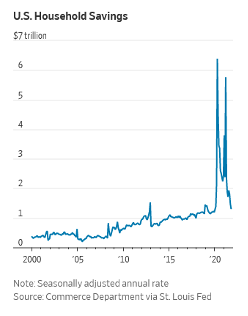
There is no argument that the Pandemic has widened the wealth gap.  The stimulus provided by Governments around the world was necessary for many, and a boon for others.  American and European households are sitting on record amounts of savings.  Some of it will be used as security for future uncertainties, but much of it is just waiting to be spent.  This cash hoard is likely one reason by supply constraints is an issue as there is a lot of deferred consumption.

Market In A Snap! September 28th-October 1st, 2021

By Jeff Anderson, CFA

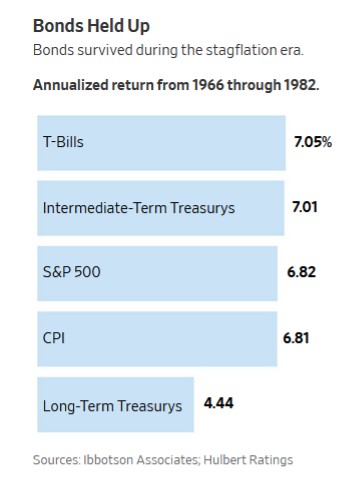
US equities were lower in September, with the S&P 500 logging its first decline since January and its worst month since September 2020.  The S&P 500 declined 4.76% for the month.  The yield on the US Treasury 10-year note climbed 19.8% to 1.487% and is back to where it was just prior to the onset of the Global pandemic in early 2020.  Oil rallied 7.65% for the month to close at $75.12 per barrel. Bonds can perform well in a rising interest rate, low growth environment if the bond portfolio is laddered – portfolios of bonds with a fixed duration target.  Most bond mutual funds and ETFs construct their portfolios to maintain a fairly constant average duration which is accomplished by constantly reinvesting in longer-dated bonds from the proceeds of matured bonds.  The higher yields of those newly purchased bonds eventually will make up for the capital losses incurred by previously owned bonds.

Employment Data Delayed (no need to be alarmed)

The US monthly employment report typically comes out the first Friday of the month.  For October, it won’t be released until the 8th (next Friday).  Consensus for non-farm payrolls is looking for growth of 513,000 in September, while the unemployment rate will drop to 5.0% from 5.2%.  First Trust’s economists believe that the consensus may be overlooking the fact that the national system of overly generous unemployment benefits due to COVID-19 ran out on Labor Day weekend.  “Many unemployed who had previously been getting payments in excess of what they could have earned while working are no longer able to do so”.   Couple that with kids going back to in-school learning, the motivation for people to get back to work are the strongest in months.  With employers struggling to hire employees and/or pay more in wages, this may come as a nice surprise.

Prices to The Moon

Much of the increase in rents is attributable to the pandemic and the rental vacancy spike and eviction moratorium enacted by the federal government.  Regardless, the Dallas Federal Reserve predicts that the official rent index from the Bureau of Labor Statistics will increase 6.9% by year-end 20-23, which would be the highest in more than 30 years.  Despite the ongoing debate surrounding an increase in inflation being permanent or transitory, certain sectors of the economy continue to eat into the wallets of the US household.

Market In A Snap! September 20th – September 24th, 2021

By Jeff Anderson, CFA

FedEx Delivers an Inflation Message

FedEx reported earnings this week that disappointed analysts, sending shares down over 10% for the week.  The earnings miss was attributable to a higher cost of labor and overall labor shortages. Packages were re-routed to distribution hubs that had sufficient labor availability.  The company stated, “The current labor environment is driving inefficiencies in the operation of our network and significantly impacting our financial results”.  FedEx’s President and COO also announced that shipping rates will increase 6 to 8% in January 2022 in addition to a fuel surcharge increase starting November 1, 2021.

The FOMC met this week

Fed Governor Jay Powell held his quarterly press conference Wednesday, where he delivered the Fed’s message re: the state of the economy, inflation expectations, interest rates and tapering.  The economy is continuing to grow and is still coping with the effects of the global pandemic economic shutdown in 2020.  Even though inflation expectations have been raised multiple times by the FOMC (now at 2.2%), the current pace of inflation is running much higher (see chart), yet the Fed is standing firm on their belief that it is still transitory.  Mr. Powell stated that the Fed will begin tapering their bond purchases later in the year by $10 billion per month. At the current pace of $120 billion per month, tapering should be completed within 12 months, at which time we can expect the Fed to begin raising interest rates.  Interestingly, the 5-year US inflation breakeven expectation is still below 2.5%, slightly above the FOMC’s upper range but well below the current run rate.  The UST 10-year note bumped up is a week from 1.3% to roughly 1.4%, still firmly in the negative real yield zone.

August Housing Starts increased 3.9% to a 1.615 million annual rate.

The gain was entirely due to multi-family starts.  Single-family starts declined 2.8% for the month.  First Trust’s senior economist wrote this week that, “While it’s too early to know for sure, there are signs developers may be shifting resources away from single-family home construction and toward larger apartment buildings in response to rapidly rising rents as some people move back into big cities and the eviction moratorium ends”.  First Trust’s Brian Wesbury went on to say “While the monthly pace of activity will ebb and flow as the recovery continues, we expect housing starts to remain in an upward trend.  A big reason for our confidence is that builders have a huge number of permitted projects sitting in the pipeline waiting to be started.  In fact, the backlog of projects that have been authorized but not yet started is currently the highest since the series began back in 1999” (emphasis added).

The Standard & Poor’s 500 (S&P 500) is an unmanaged group of securities considered to be representative of the stock market in general. It is not possible to invest directly in an index.*******