Market In A Snap! September 28th-October 1st, 2021

By Jeff Anderson, CFA

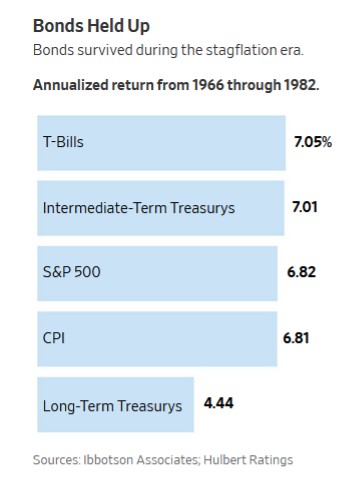
US equities were lower in September, with the S&P 500 logging its first decline since January and its worst month since September 2020.  The S&P 500 declined 4.76% for the month.  The yield on the US Treasury 10-year note climbed 19.8% to 1.487% and is back to where it was just prior to the onset of the Global pandemic in early 2020.  Oil rallied 7.65% for the month to close at $75.12 per barrel. Bonds can perform well in a rising interest rate, low growth environment if the bond portfolio is laddered – portfolios of bonds with a fixed duration target.  Most bond mutual funds and ETFs construct their portfolios to maintain a fairly constant average duration which is accomplished by constantly reinvesting in longer-dated bonds from the proceeds of matured bonds.  The higher yields of those newly purchased bonds eventually will make up for the capital losses incurred by previously owned bonds.

Employment Data Delayed (no need to be alarmed)

The US monthly employment report typically comes out the first Friday of the month.  For October, it won’t be released until the 8th (next Friday).  Consensus for non-farm payrolls is looking for growth of 513,000 in September, while the unemployment rate will drop to 5.0% from 5.2%.  First Trust’s economists believe that the consensus may be overlooking the fact that the national system of overly generous unemployment benefits due to COVID-19 ran out on Labor Day weekend.  “Many unemployed who had previously been getting payments in excess of what they could have earned while working are no longer able to do so”.   Couple that with kids going back to in-school learning, the motivation for people to get back to work are the strongest in months.  With employers struggling to hire employees and/or pay more in wages, this may come as a nice surprise.

Prices to The Moon

Much of the increase in rents is attributable to the pandemic and the rental vacancy spike and eviction moratorium enacted by the federal government.  Regardless, the Dallas Federal Reserve predicts that the official rent index from the Bureau of Labor Statistics will increase 6.9% by year-end 20-23, which would be the highest in more than 30 years.  Despite the ongoing debate surrounding an increase in inflation being permanent or transitory, certain sectors of the economy continue to eat into the wallets of the US household.

Market In A Snap! September 20th – September 24th, 2021

By Jeff Anderson, CFA

FedEx Delivers an Inflation Message

FedEx reported earnings this week that disappointed analysts, sending shares down over 10% for the week.  The earnings miss was attributable to a higher cost of labor and overall labor shortages. Packages were re-routed to distribution hubs that had sufficient labor availability.  The company stated, “The current labor environment is driving inefficiencies in the operation of our network and significantly impacting our financial results”.  FedEx’s President and COO also announced that shipping rates will increase 6 to 8% in January 2022 in addition to a fuel surcharge increase starting November 1, 2021.

The FOMC met this week

Fed Governor Jay Powell held his quarterly press conference Wednesday, where he delivered the Fed’s message re: the state of the economy, inflation expectations, interest rates and tapering.  The economy is continuing to grow and is still coping with the effects of the global pandemic economic shutdown in 2020.  Even though inflation expectations have been raised multiple times by the FOMC (now at 2.2%), the current pace of inflation is running much higher (see chart), yet the Fed is standing firm on their belief that it is still transitory.  Mr. Powell stated that the Fed will begin tapering their bond purchases later in the year by $10 billion per month. At the current pace of $120 billion per month, tapering should be completed within 12 months, at which time we can expect the Fed to begin raising interest rates.  Interestingly, the 5-year US inflation breakeven expectation is still below 2.5%, slightly above the FOMC’s upper range but well below the current run rate.  The UST 10-year note bumped up is a week from 1.3% to roughly 1.4%, still firmly in the negative real yield zone.

August Housing Starts increased 3.9% to a 1.615 million annual rate.

The gain was entirely due to multi-family starts.  Single-family starts declined 2.8% for the month.  First Trust’s senior economist wrote this week that, “While it’s too early to know for sure, there are signs developers may be shifting resources away from single-family home construction and toward larger apartment buildings in response to rapidly rising rents as some people move back into big cities and the eviction moratorium ends”.  First Trust’s Brian Wesbury went on to say “While the monthly pace of activity will ebb and flow as the recovery continues, we expect housing starts to remain in an upward trend.  A big reason for our confidence is that builders have a huge number of permitted projects sitting in the pipeline waiting to be started.  In fact, the backlog of projects that have been authorized but not yet started is currently the highest since the series began back in 1999” (emphasis added).

The Standard & Poor’s 500 (S&P 500) is an unmanaged group of securities considered to be representative of the stock market in general. It is not possible to invest directly in an index.*******

Market In A Snap! September 13th-September 17th, 2021

By Jeff Anderson, CFA

Retail Sales for August rose 0.7%

Retail sales numbers for August came out this week, surprising many economists and showing the resilience of the American consumer.  Consumption accounts for approximately 2/3rds of GDP.  Even though most of the stimulus checks are behind us, coupled with concerns surrounding the delta variant, Americans continue to spend (see chart).  However, according to the Wall Street Journal, “Americans in recent weeks have cut spending on travel, and multiple artists have canceled concerts. Such spending isn’t captured in retail sales”.  With the US consumption responsible for roughly 2/3rds of GDP, it will be interesting to see how mask mandates, capacity restrictions and overall consumer fears play into retail sales in the fall as we enter the Thanksgiving through Christmas shopping (& travel) season.

Rates and the Fed’s Asset Purchases

The Federal Reserve will begin to taper their bond purchases towards the end of the year.   The common perception is that US Government bond yields rise when the Fed stops or slows, bond purchases and yields decrease when they buy (think Quantitative Easing or “QE”).  From the chart below you can see that opposite is true.  The light great vertical bars indicate periods of bond purchases. The blue line shows the yield on the 10-Yr US Treasury note.  Yields rise during QE.  Why is that? One explanation is that asset purchases lead to investor confidence which in turn supports investors’ risk appetite, driving investors out of safe havens and into risk assets.

Source: Natixis Investment Managers – Solutions

The Standard & Poor’s 500 (S&P 500) is an unmanaged group of securities considered to be representative of the stock market in general. It is not possible to invest directly in an index.*******

Market In A Snap! August 31st- September 3rd, 2021

By Jeff Anderson, CFA

Record Highs

“U.S. Hiring Slowed Sharply in August. The economy added 235,00 jobs as the Delta variant appears to be weighing on consumer confidence”, was the title in Friday’s Wall Street Journal.  Economists’ estimates were for 720,000.  A big miss to put it bluntly. Payrolls are still 500,000 below the levels prior to the onset of the pandemic in Q1 of 2020.  Despite this, employer demand for workers is still strong.  We are still muddling our way back to normal and this is just another example of how disruptive this past 18 month has been. The S&P 500 shrugged this off and closed essentially flat on the day.  The market continues to march higher despite these challenges. Many leading economic indicators have weakened and it’s clear, to some, that the economy is decelerating.

As Labor Day is finally upon us, money managers will be back from vacation and digesting the recent economic data. Couple that with September being historically one of the tougher months for the market, it will be interesting to see if the US equity markets can continue to march higher.

Gas Prices Soaring

Californians vacationing out of state are always pleasantly surprised at the cost of filling up their rental cars. Arizona, Florida, South Carolina, and Texas all have prices that are roughly 33% cheaper.  California gas prices are even more expensive than Hawaii.  How can that be? Taxes.  Total taxes per gallon amount to $1.18 or 42% of the average price for a gallon of fuel in Texas.  See the picture for the breakdown, compliments of the Western States Petroleum Industry.

Market In A Snap! August 16th-August 20th, 2021

By Jeff Anderson, CFA

The S&P 500 opened down on Monday after news of a strained exit for American armed forces from Afghanistan as well as more news of increased cases of COVID-19’s delta variant.  By Tuesday afternoon, the index was making all-time highs. By Friday’s close, it was down 0.6% for the week.

On Thursday, the Labor Department reported jobless claims of 348,000 for the week ending August 14th which is a new pandemic low but well above the approximate 200,000 level that existed prior to the pandemic.

The Fed will be holding its annual Economic Policy Symposium in Jackson Hole, Wyoming August 26th.  Fed Governor Jay Powell will deliver his remarks on the 27th and Fed watchers will be looking for any signals about tapering its asset purchases as well as the economic outlook.  Inflation will likely be a key topic.

While on the topic of inflation, Krispy Kreme announced this week that they will consider increasing prices in September in response to rising costs for key commodities like sugar and edible oils that go into making their delicious donuts.  Whether the inflation in commodities is transitory or not, it’s a good reminder that prices for food, energy, clothing etc., will continue to rise and eat away (no pun intended) at your retirement savings.  

When Krispy Kreme opened in 1937 a dozen donuts cost $0.80.  Today, that same dozen costs $8.00. (1) Over time, prices rise. Period.  Add that to the other two certainties in life.

Yet despite this example of food inflation, the debate remains whether this sudden increase in inflation (“CPI”) is transitory. The 10- and 20-year US government treasury yields are still below 1.5% and 2% respectively.  If inflation truly takes hold, the bond market will send a clear signal in rising long-term yields.

Enjoy the weekend!

Jeff Anderson, CFA

Portfolio Manager.